
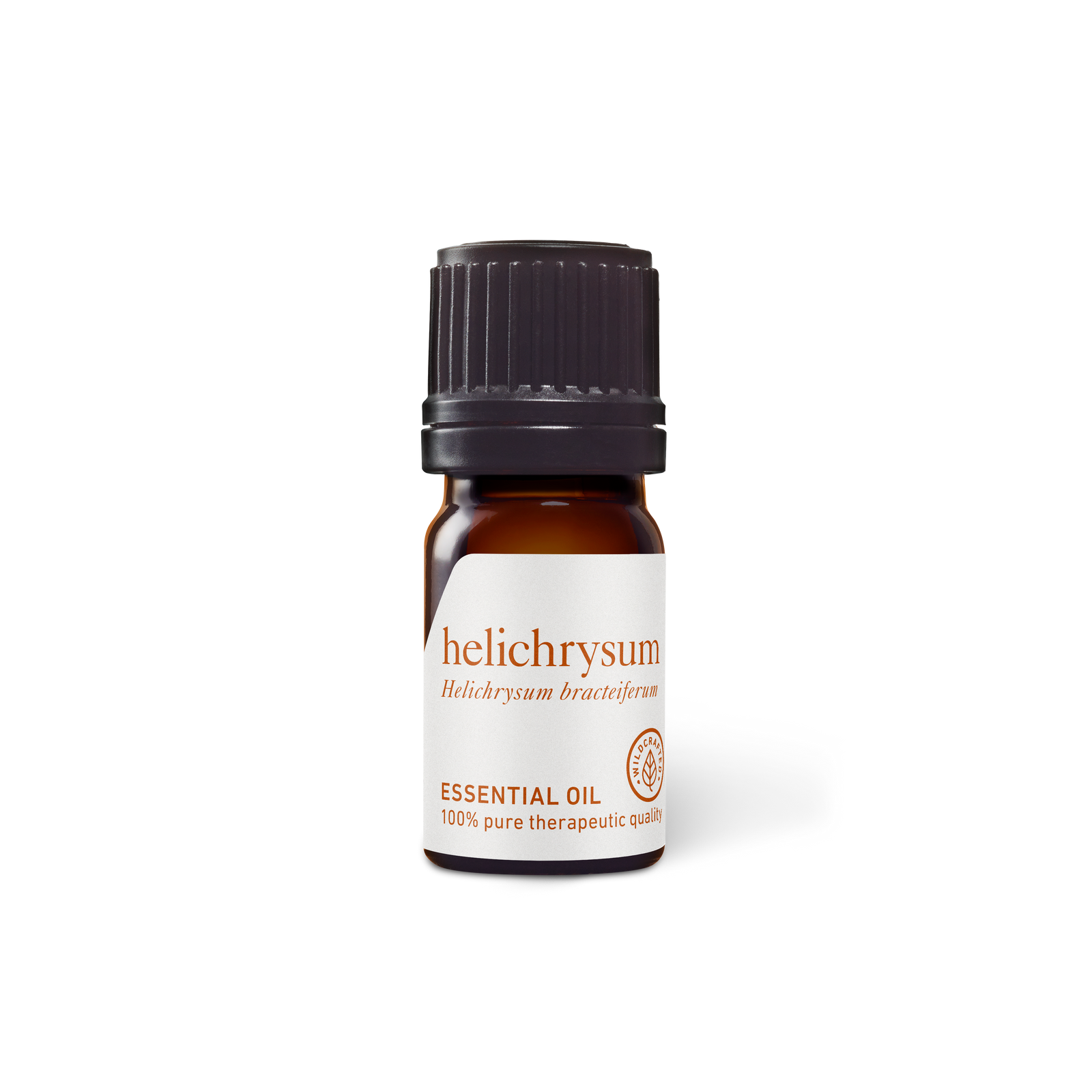
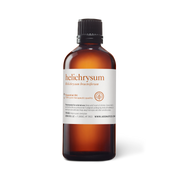
Helichrysum Bracteiferum Oil
Helichrysum bracteiferum
Product Properties
Country
Madagascar
Plant Part
Flowers
Cultivation
Wildcrafted
Chemical Families
Monoterpenes
Sesquiterpenes
Oxides
Botanical Families
Asteraceae
Extraction Method
Steam Distilled
Therapeutic & Aromatic Properties
Therapeutic Properties
Analgesic
Expectorant
Immunostimulant
Mucolytic
Decongestant
Antimicrobial
Anti-inflammatory
Antioxidant
Antifungal (candida)
Notes
Middle
Base
Aromas
Fresh
Herbaceous
Camphoraceous
Suggested Uses
Breathe - Allergy Season
Do you start sniffling and sneezing during pollen season? Make an inhaler with Helichrysum bracteiferum.
Breathe - Congestion
Make a chest rub with Helichrysum bracteiferum and Eucalyptus globulus when your breath feels clogged, stuffy, or tight.
Relieve - Muscle Tightness
Massage your tight neck with Helichrysum bracteiferum diluted in Trauma Oil. The cool relief can even radiate up into your scalp.
Safety and Shelf Life
Shelf Life
4 years
Safety & Warnings
It may antidote homeopathic remedies. It is too strong to use with babies or children under ten years old on their faces or in a steam. Use with caution on children between 5-10 years old. Care must be taken when using with asthmatics.
GCMS Data
All essential oils at Aromatics International are GC/MS tested. This ensures that we sell oils with the highest possible integrity for therapeutic use. Learn more about GC/MS reports here.
You can check out some of the latest batches by clicking the links below.

Browse Helichrysum Bracteiferum Oil Recipes
More Recipes (2)-
Swollen Injury Lotion
Bring welcome relief to areas that are inflamed and feel te... -
Madagascar Steam Blend
This exotic Madagascar steam blend is perfect for relieving...



The Aromatics International Approach

Committed To Purity & Quality
Our products are made with organically-grown plants and distilled with attention to quality at each step of the process

Mindful Sustainability
We consider our impact on the earth at each step of our process

Founded by Aromatherapists
Over 20 years ago Aromatics International was founded to provide the highest therapeutic oils
- Reviews
- Questions
- oils
- scent
- blend
- Aromatics International
- Helichrysum
- species
- favorites
- back
- chest
- time
Beautiful oil
Beautiful oil, fragrant and blends well.
 United States
Haven’t used it yet
But I know I will love it when I do. As I love all my high quality oils I receive from Aromatics International.
United StatesOily goodness
I use this helichrysum in a blend for my back. It adds the skin healing properties that round out the blend.
United StatesA blessing
Pollen season is quite challenging where I live. I’m always looking for solutions. I’d tried helichrysum in the past, but not this species. After reading about it, I took advantage of the sale price and decided to give it a try. I filled an inhaler and breathed deeply. Wow! Less aggressive feeling than some other oils and it works. I’m now working on a roll on blend for chest and sinuses. Thank you thank you thank you p.
United StatesExcellent for congestion!!!
Excellent quality oil! I’m glad to found your online store and so many amazing oils.