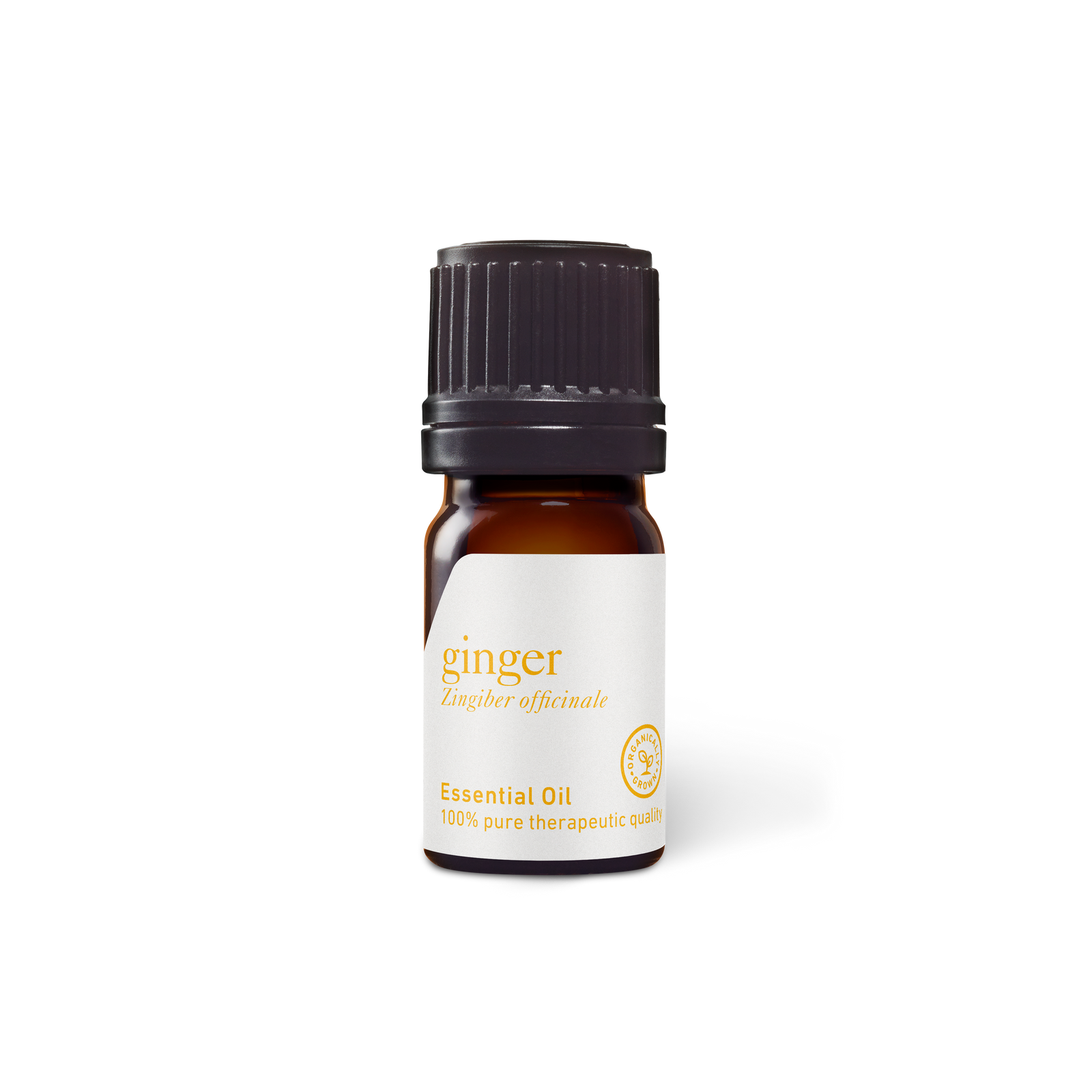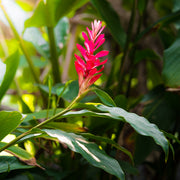
Ginger - Zingiber officinale

Ginger is warming and used for internal and external "dampness".  Great for nausea caused by traveling, pregnancy, and chemotherapy.  Ginger stimulates more circulation to the areas on which it is used. Its antispasmodic properties bring relaxation and calming to an otherwise contracted situation. When the stress of contraction is relieved, the opportunity for healing arises.

  • Batch: GIN-103
  • Distillation Date: Winter 2010
  • Suggested Shelf Life: 4-5 Years
Sale!

GC/MS Report Archives

Specifics
Country of Orgin: China Extraction Method: Steam Distilled
Chemical Families: Sesquiterpenes Plant Parts: Rhizomes
Cultivations: Unsprayed Botanical Families: Zingerberaceae
Aromas: Spicy, Sweet, Warm and Radiant Notes: Middle/Base

Personal Experience, Research, Possible Actions

Patricia Davis writes in her book Aromatherapy: An A-Z that in Traditional Chinese Medicine, Ginger is used in any condition where the body is not dealing well with internal or external moisture. Diarrhea and excess mucus are examples of an inability to deal with internal moisture. Rheumatism, along with many other winter health concerns, is aggravated by external damp conditions. The warming properties of Ginger are called for in these situations.

Great to help bring balance to the digestive system.  Mojay states, "Therapeutically, ginger oil is essentially warming, invigorating & decongesting."  Mojay also suggests combining Orange, Roman Chamomile and coriander essential oils to relief nausea associated with travel and morning sickness. 

Try adding a few drops of Ginger to your blends in the winter. It offers that spicy, warming, soothing sensation that is so needed at this time of year.


Learn More

Therapeutic Properties

  • Analgesic - numbs pain
  • Anti-inflammatory - alleviates inflammation
  • Antiseptic - assists in fighting germs/infections (urinary, pulmonary)
  • Antispasmodic - relieves spasms and cramps
  • Carminative/Tonic - settles digestion and may assist in preventing gas
  • Diaphoretic - promotes perspiration, helping skin eliminate waste
  • Expectorant - removes excess mucus from respiratory system
  • Antiemetic - reduces incidence and severity of nausea or vomiting
  • Warming

Emotional and Energetic Qualities

Stability and balance
Stimulates willpower, and restores motivation
Combats burnout on any level
Warms and encourages energy

Recipe

For Chronic Arthritis/Rheumatism
2 drops Ginger
2 drops Helichrysum
3 drops G. Chamomile
2 drops Juniper
5 drops Lavender
2 drops Mandarin

Blend in Trauma oil.  Put directly on areas of concern.

References:

1. Battaglia S. The Complete Guide to Aromatherapy. 2nd edition, The International Centre of Holistic Aromatherapy, Australia, 2003
2. Davis P. Aromatherapy an A-Z. New revised edition C.W. Daniel Company Limited, England, 1999
3. Keville, K. Aromatherapy, A Complete Guide to the Healing Art, The Crossing press, USA, 1995
4. Mojay G. Aromatherapy for Healing the Spirit, Henry Holt and Company Inc., England, 1996
5. Price S. Aromatherapy for Health Professionals, Churchill Livingstone, 1995

Safety

May cause skin irritation for those with sensitive skin. Use in low dilution when applying to the skin, such as in baths or massage oils.

Essential Oil Quick List

or see a printable list of oils

Aromatics International
www.aromaticsinternational.com

Zingiber officinale

Ginger

Country of Origin: China

Stock # GIN-103
Date: Winter 2010
GAS CHROMATOGRAPHY ANALYSIS ( % )

Monoterpenes

α-pinene1.82
β-phellandrene5.80
camphene6.18
d-limonene1.26

Sesquiterpenes

α-curcumene5.04
β-bisabolene7.67
β-selinene1.96
β-sesquiphellandrene12.55

Sesquiterpenes (continued)

germacrene D1.20
other sesquiterpenes7.79
Z-E-beta farnesene4.59
zingiberene31.50

Monoterpenols

borneol0.89

Aldehydes

geranial 0.38

Esters

geranyl acetate0.59

Oxides

1,8-cineole1.06

Aromatics International
www.aromaticsinternational.com

Zingiber officinale

Ginger

Country of Origin: Indonesia

Stock # GIN-102
Date: Winter 2008
GAS CHROMATOGRAPHY ANALYSIS ( % )

Monoterpenes

α-phellandrene0.43
α-pinene2.34
β-myrcene1.09
β-phellandrene6.17
camphene8.38
d-limonene1.66
terpinolene0.28

Sesquiterpenes

α-copanene0.32
α-curcumene4.00
α-farnesene3.99
α-muurolene1.13
α-zingiberene25.64
β-bisabolene6.16
β-sesquiphellandrene7.77

Sesquiterpenes (continued)

δ-cadinene0.66
γ-curcumene0.20
germacrene A0.14
germacrene D1.34

Monoterpenols

borneol1.34
geraniol0.39
terpinen-4-ol0.22

Sesquiterpenols

other sesquiterpenols3.00

Aldehydes

citronellal0.20
geranial 6.59
neral 4.08

Esters

geranyl acetate0.42

Oxides

1,8-cineole2.91

Aromatics International
www.aromaticsinternational.com

Zingiber officinale

Ginger

Country of Origin: China

Stock # GIN-101
Date: Fall 2006
GAS CHROMATOGRAPHY ANALYSIS ( % )

Monoterpenes

α-pinene2.84
camphene8.48
d-limonene2.65

Sesquiterpenes

α-farnesene5.71
α-zingiberene29.58
β-bisabolene7.24
β-sesquiphellandrene11.08
curcumene8.34
germacrene D1.22

Monoterpenols

linalol0.27

Aldehydes

geranial 0.38
neral 0.32

Oxides

1,8-cineole5.79

Scroll to the bottom of the window to print details

Ginger - <em>Zingiber officinale</em>

Ginger - Zingiber officinale

Ginger is warming and used for internal and external "dampness".  Great for nausea caused by traveling, pregnancy, and chemotherapy.  Ginger stimulates more circulation to the areas on which it is used. Its antispasmodic properties bring relaxation and calming to an otherwise contracted situation. When the stress of contraction is relieved, the opportunity for healing arises.

  • Batch: GIN-103
  • Distillation Date: Winter 2010
  • Suggested Shelf Life: 4-5 Years
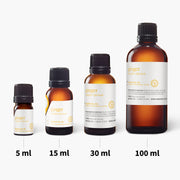
Sizes / Prices
  • sample (1.5ml) - $5.00
  • 1/2 oz. - $16.00
  • 1 oz. - $28.80
  • 2 oz. - $51.20
  • 8 oz. - $153.60
  • 16 oz. - $256.00
  • 32 oz. - $409.60

Specifics

Country of Orgin: Indonesia Extraction Method: Steam Distilled
Chemical Families: Sesquiterpenes Plant Parts: Rhizomes
Cultivations: Unsprayed Botanical Families: Zingerberaceae
Aromas: Spicy, Sweet, Warm and Radiant
Note: Middle/Base

Personal Experience, Research, Possible Actions

Patricia Davis writes in her book Aromatherapy: An A-Z that in Traditional Chinese Medicine, Ginger is used in any condition where the body is not dealing well with internal or external moisture. Diarrhea and excess mucus are examples of an inability to deal with internal moisture. Rheumatism, along with many other winter health concerns, is aggravated by external damp conditions. The warming properties of Ginger are called for in these situations.

Great to help bring balance to the digestive system.  Mojay states, "Therapeutically, ginger oil is essentially warming, invigorating & decongesting."  Mojay also suggests combining Orange, Roman Chamomile and coriander essential oils to relief nausea associated with travel and morning sickness. 

Try adding a few drops of Ginger to your blends in the winter. It offers that spicy, warming, soothing sensation that is so needed at this time of year.


Learn More

Therapeutic Properties

  • Analgesic - numbs pain
  • Anti-inflammatory - alleviates inflammation
  • Antiseptic - assists in fighting germs/infections (urinary, pulmonary)
  • Antispasmodic - relieves spasms and cramps
  • Carminative/Tonic - settles digestion and may assist in preventing gas
  • Diaphoretic - promotes perspiration, helping skin eliminate waste
  • Expectorant - removes excess mucus from respiratory system
  • Antiemetic - reduces incidence and severity of nausea or vomiting
  • Warming

Emotional and Energetic Qualities

Stability and balance
Stimulates willpower, and restores motivation
Combats burnout on any level
Warms and encourages energy

Recipe

For Chronic Arthritis/Rheumatism
2 drops Ginger
2 drops Helichrysum
3 drops G. Chamomile
2 drops Juniper
5 drops Lavender
2 drops Mandarin

Blend in Trauma oil.  Put directly on areas of concern.

References:

1. Battaglia S. The Complete Guide to Aromatherapy. 2nd edition, The International Centre of Holistic Aromatherapy, Australia, 2003
2. Davis P. Aromatherapy an A-Z. New revised edition C.W. Daniel Company Limited, England, 1999
3. Keville, K. Aromatherapy, A Complete Guide to the Healing Art, The Crossing press, USA, 1995
4. Mojay G. Aromatherapy for Healing the Spirit, Henry Holt and Company Inc., England, 1996
5. Price S. Aromatherapy for Health Professionals, Churchill Livingstone, 1995

Safety

May cause skin irritation for those with sensitive skin. Use in low dilution when applying to the skin, such as in baths or massage oils.